
Multi-Process vs. Precision vs. Speed: How to Simultaneously Balance the Equipment
2025-09-28(823)Browse
The current semiconductor packaging environment is facing a significant contradiction: the growing demand for complex products versus rigid traditional manufacturing capabilities. Specifically, this contradiction is mainly reflected in two aspects: the multi-process nature of semiconductor packaging, and the current mainstream semiconductor mounting structures.
I. Diverse Semiconductor Packaging Process Requirements:
The Prevalence of "One Machine, One Process" Increases Corporate Capital Burden
The back-end processes of semiconductor packaging involve various substrate materials (lead frames, PCBs, ceramics, glass, etc.) and complex interconnection processes (die attach, bonding, etc.). Different materials and processes have vastly different requirements for equipment, leading to the widespread phenomenon of "dedicated machines for dedicated uses."
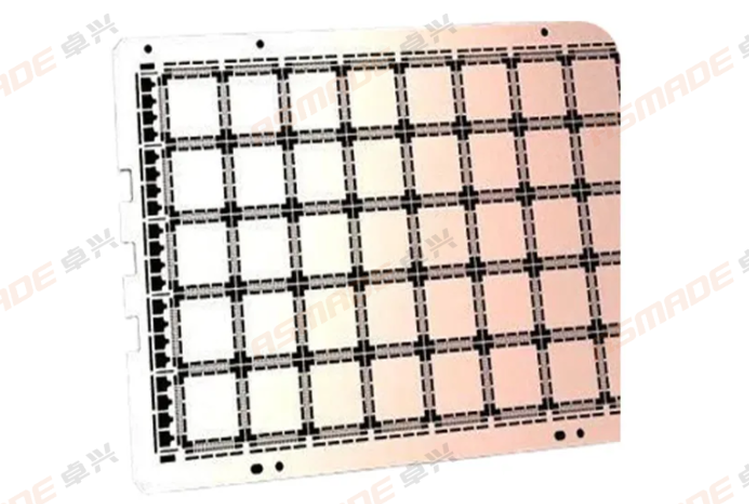
1. Lead Frame Packaging
Common processes for lead frame packaging include silver epoxy pasting and eutectic bonding. It faces the pain point of cumbersome line changeovers: a single production line needs to switch between producing silver epoxy pasting products and eutectic bonding products at any time. These two processes require completely different equipment (eutectic bonding requires a heating stage, vacuum adsorption, and high-temperature nozzles). Switching processes means replacing the entire machine, re-debugging, and recalibrating, which can take hours or even longer.
2. PCB Substrate Packaging
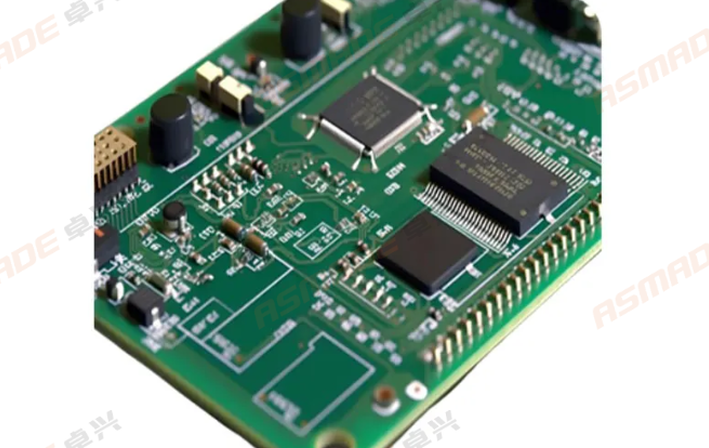
Common processes for PCB substrate packaging include silver epoxy pasting and multi-chip integration, where "multi-chip integration" is the biggest challenge. A complex chip (such as SiP system-in-package) may simultaneously contain logic chips, memory chips, RF chips, etc. These chips may come from different wafers, have different thicknesses, different sizes, and even require different pasting processes. How to handle these diverse material inputs is a critical issue.
3. Ceramic Substrate Packaging
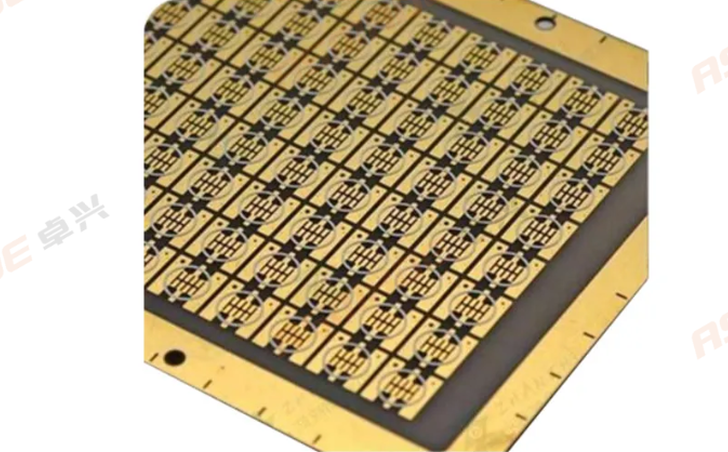
In the production of aerospace and military products, many different processes are required, such as silver epoxy, eutectic, ultrasonic, and bonding.
It not only faces the challenge of process diversification, but bonding also requires prolonged high temperature and high pressure, posing significant challenges to equipment thermal management, material thermal expansion control, and precision force control.
Facing diversified substrates and processes, for many packaging manufacturers, "dedicated machines for dedicated uses" is the current "first solution," but it is not the "optimal solution." It causes huge capital waste, cannot adapt to the normalcy of order fluctuations and process iterations, and its rigid production lines force companies to invest in additional specialized equipment for each new product or process. Therefore, how to break free from the dilemma of repeated investment has become a core issue related to corporate competitiveness.
II. Problems with Mainstream Mounting Structures:
Inability to Simultaneously Balance Three Major Demands, Affecting Production Capacity
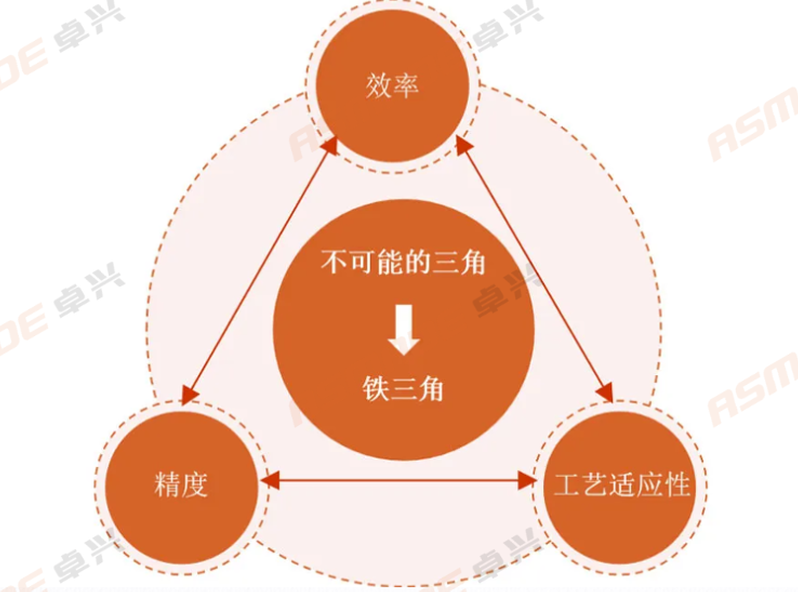
Besides the "dedicated machine" phenomenon, the second major aspect of the contradiction in semiconductor packaging lies in the structure. There is a term in economics called the "impossible triangle," which also applies to semiconductor packaging. The impossible triangle in semiconductor packaging usually refers to the imbalance among "precision," "speed," and "process adaptability." How to solve this "impossible triangle" and turn it into a "process iron triangle" is a question every professional in the packaging industry needs to consider.
Efficiency vs. Precision
Achieving high efficiency requires significant acceleration of moving parts, but this generates enormous inertial forces, leading to unavoidable elastic deformation and vibration in the mechanical structure. If the excitation frequency generated by the motion happens to match a certain natural frequency of the equipment's mechanical structure, it can cause intense resonance, affecting precision.
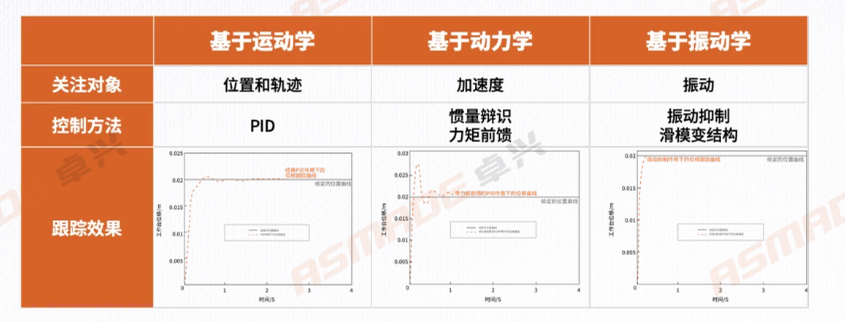
Therefore, Zhuoxing Semiconductor's motion control team designs more advanced torque feedforward and vibration suppression algorithms to solve this:
① For simple point-to-point motion, we typically use kinematics-based PID control.
② To improve response speed and counteract gravity, the system adopts dynamics-based torque feedforward and inertia identification.
③ To address jitter issues at high speeds, engineers implement vibration-based sliding mode variable structure control algorithms.
Precision vs. Process Adaptability
Each new process introduces unique sources of interference. Changing nozzles or tools of different materials or weights alters the dynamic characteristics of the motion system. To maintain high precision, the equipment must establish independent error compensation models for every possible process configuration and tool combination.
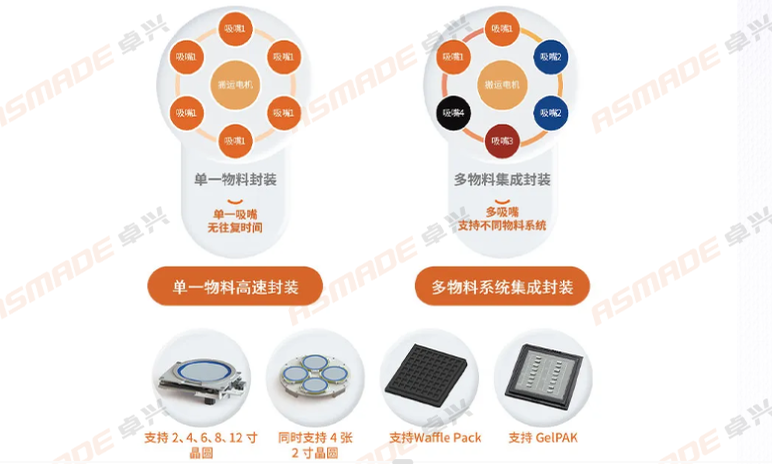
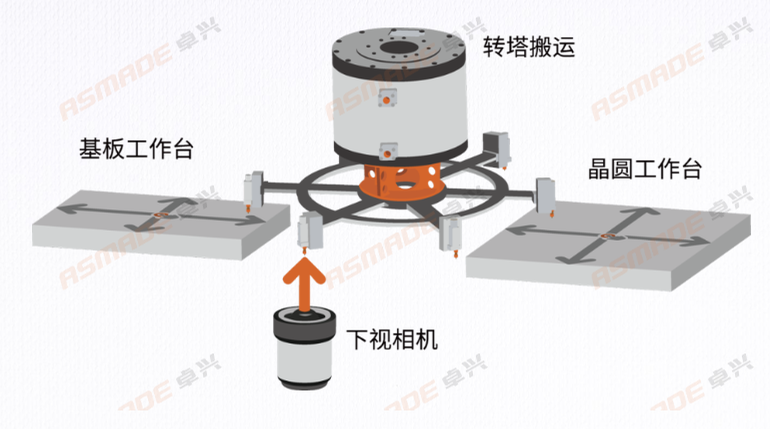
Therefore, Zhuoxing Semiconductor adopts a planar turret-type mounting architecture to perfectly compensate for this defect:
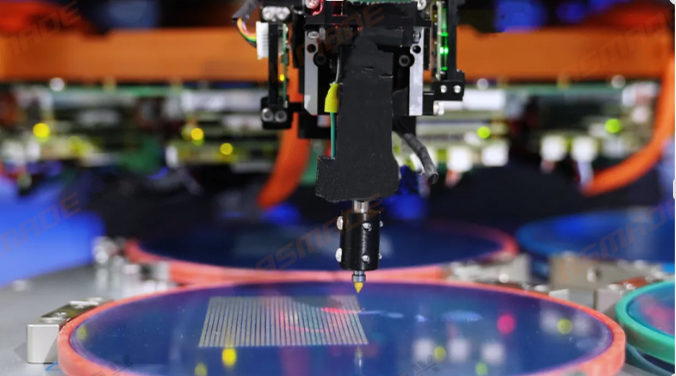
Different materials have independent feeding systems, enabling support for multi-material hybrid bonding and hybrid mounting.
During the operation of the mounting architecture, a transfer stage and vision inspection mechanism are installed at one station to ensure mounting precision in real time, guaranteeing production accuracy.
Efficiency vs. Process Adaptability
When equipment switches between different material inputs, line changeover time is needed to replace nozzles, calibrate height, and adjust process parameters. This process is very time-consuming and severely reduces overall equipment effectiveness. Dedicated equipment, however, requires no changeover and can run continuously at high speed, but completely sacrifices multi-process adaptability.
Therefore, Zhuoxing Semiconductor's architecture proposes two concepts:
Modular Design: Different process modules are made into plug-and-play standard units, allowing process changes through quick module replacement, solving the adaptability problem of dedicated machines.
Planar Turret Architecture: Different nozzles at different stations handle different material inputs, solving the efficiency problem of multi-material integration.
Solution: Planar Turret Structure
III. High-Precision Packaging Equipment:
Breaking the Dilemma of Equipment "Multi-Process Adaptability" and the "Impossible Triangle"
Addressing the "dedicated machine" challenge posed by multi-process production demands, and the contradiction in balancing precision, speed, and process adaptability, Zhuoxing Semiconductor has independently developed two new types of equipment—the High-Precision Multi-Function Mounter and the Semiconductor Silver Epoxy Die Attach Machine. Through modular design, planar turret structure, and advanced torque feedforward and vibration suppression algorithms, these solutions help crack the problem of multi-process adaptability in equipment, find the optimal balance point best suited for current technological goals, overcome the difficulty of simultaneously achieving the "impossible triangle," and transform the impossible triangle into an iron triangle.
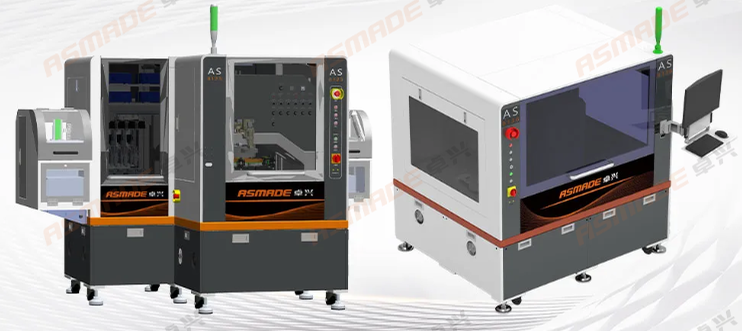
About Us
Founded by an internationally leading team of motion control experts and bringing together the industry's top packaging technology specialists, we are a national high-tech enterprise and a specialized and sophisticated "Little Giant" enterprise with over 20 years of technological accumulation and market practice, focusing on the R&D, manufacturing, and sales of high-precision semiconductor equipment.
Our main products include semiconductor packaging equipment, power device packaging equipment, Mini LED chip transfer equipment, intelligent control equipment, and semiconductor packaging process management systems.
We are committed to providing customers with one-stop overall solutions for semiconductor packaging processes. Our products feature fully independent intellectual property rights, and many of our equipment models are industry firsts.
New Information
-
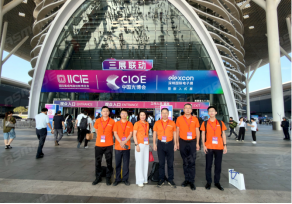
Highlights|ASMADE · Zhuoxing Semiconductor at CIOE 2026 — The 27th China International Optoelectronic Exposition
On September 11, 2026, the three day 27th China International...
-
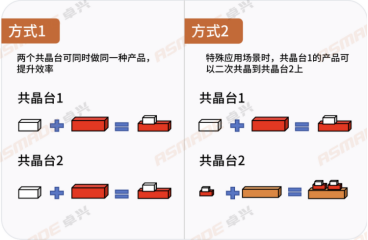
AS8138 High Precision Eutectic Bonder|Dual Eutectic Stage Architecture Innovation to Solve Mass Production Challenges of Multi Layer Stacking for High Speed Optical Devices
https://weixin.qq.com/sph/ANb7T2gnxp(点击链接播放视频) Dri...
-
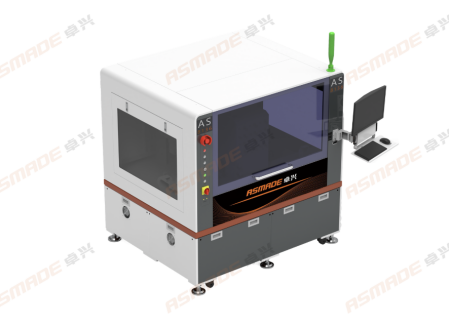
Cordially Invited | ASMADE Zhuoxing Semiconductor Meets You at CIOE 2026 — The 27th China International Optoelectronic Exposition
Cordially Invited | ASMADE Zhuoxing Semiconductor Meets You ...
-
Mass Production Breakthrough of Automotive Backlight Mini/Micro LED: Process Bottlenecks of MIP Route & Flip Chip Bonding Solutions
As smart cockpits evolve toward larger sizes and higher imag...
0755-29691921
Hotline:0755-29691921
Phone:0755-29691921
Fax:0755-29691921
Email:market@asmade.cn
Address:Building 3, Xifengcheng Industrial Park, Fuhai Street, Bao'an District, Shenzhen City, Guangdong Province





 0755-29691921